
Whether you are stepping onto the property ladder, preparing to sell your family home, or expanding your buy to let portfolio, one three letter acronym consistently takes centre stage in the UK property market: the EPC.
In an era where volatile energy prices dominate the headlines and environmental consciousness is at an all time high, understanding the EPC metric and how energy performance ratings impact property market value has never been more crucial. Once viewed as a mere administrative tick box exercise introduced back in 2007, the Energy Performance Certificate has evolved into a powerful financial indicator. Modern buyers are actively seeking out energy-efficient homes, meaning your property’s EPC rating is no longer just about reducing your carbon footprint, it is about tangible, long term financial returns.
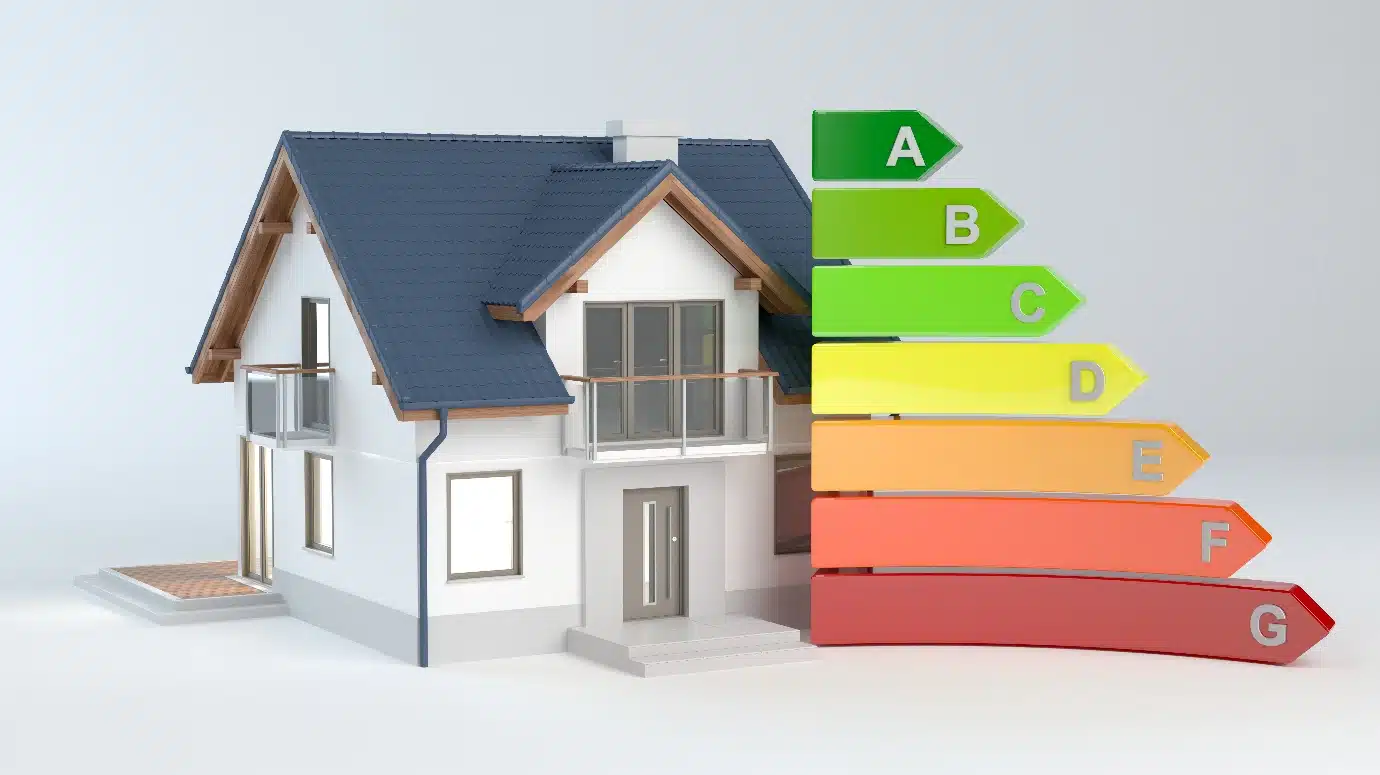
Decoding the EPC: How Is Your Home Graded?
What exactly goes into an EPC? In simple terms, an Energy Performance Certificate grades your property’s energy efficiency on a colour coded scale from A (highly efficient) to G (highly inefficient).
Behind the scenes, the grading relies on the Standard Assessment Procedure calculation methodology. This government approved framework evaluates your home’s structural elements and systems to estimate energy usage, fuel costs, and carbon dioxide emissions. During an assessment, a certified domestic energy assessor will inspect your property’s construction type, the depth of loft insulation, wall types (cavity or solid), window glazing and the efficiency of your primary heating systems and lighting. The resulting numerical score, ranging from 1 to 100+, dictates where your property lands on the A to G scale.
It is also vital to keep an eye on your energy performance certificate validity and renewal. An EPC is legally valid for ten years. However, if you have made significant energy saving improvements to your home since your last assessment, such as installing a modern combi boiler or upgrading to double glazing, arranging an early renewal before listing your property is highly recommended. Relying on an outdated, lower graded certificate could mean drastically underselling your home’s true efficiency.
The Direct Link Between Energy Ratings and House Prices
Many homeowners naturally ask: does a high EPC rating increase property value? The short answer is a resounding yes. Extensive property market research consistently highlights a strong correlation between high energy performance ratings and premium asking prices.
To understand exactly how energy ratings affect house prices, we have to look closely at modern buyer psychology. Today’s purchasers are hyper aware of their monthly outgoings. A home boasting top tier insulation and a highly efficient boiler promises substantially lower utility costs and property appreciation goes hand in hand with this financial security. Buyers are increasingly willing to pay a higher upfront purchase price for a property that guarantees them thousands of pounds in savings on heating bills over the coming years.
Furthermore, the rise of “green mortgages” has accelerated this trend. High street lenders are now offering preferential interest rates or cashback incentives to buyers purchasing highly efficient homes, making a well rated property much more attractive to a broader pool of buyers.
This phenomenon has firmly established a green premium in residential real estate market valuations. Properties that boast an A or B rating regularly command a premium, often upwards of 10% to 14% over comparable homes with lower ratings.
Conversely, when analysing A rated versus G rated property marketability, the stark reality is that a G-rated home often languishes on the market. Buyers view poor energy ratings as a massive red flag, signalling draughty rooms, freezing winters, and immediate, expensive renovation bills. This gives potential buyers significant leverage to negotiate the asking price downward. Consequently, the way epc ratings impact property value is entirely twofold: exceptional scores justify premium asking prices, while poor scores actively invite lowball offers.
What is a Good EPC Rating for Selling?
If you are preparing to put your house on the market, you might be wondering: what is a good EPC rating for selling?
Currently, owing to the UK’s ageing housing stock, the average home sits at a band D. If you want your property to stand out to cost-conscious, modern buyers, achieving a band C or above is considered the golden benchmark. Reaching this tier signals to potential buyers that the house is well-maintained, comfortable, and future-proofed against rising energy tariffs.
Improving home energy efficiency for resale is arguably one of the smartest pre-market strategies you can deploy. Not only does a strong rating make the property more attractive on digital property portal search filters, where many users actively filter out poorly rated homes, but it also provides your estate agent with an excellent, tangible selling point to highlight during viewings.
The Rental Market and Landlord Obligations
The financial impact of the EPC metric is not limited to the sales market; it extends heavily into the private rental sector. If you are a property investor, you must be acutely aware of Minimum Energy Efficiency Standards compliance for landlords.
Under current UK legislation, privately rented properties must possess an EPC rating of at least an E before they can be legally let to new or existing tenants. Local authorities actively enforce these rules, and landlords found renting out non compliant properties face severe financial penalties, sometimes reaching up to £5,000 per property.
With ongoing government discussions frequently hinting at raising this minimum standard to a band C in the near future, landlords cannot afford to be complacent. Property investors must proactively plan for sustainable home upgrades for long term investment. Failing to upgrade your portfolio could result in lengthy void periods where a property cannot legally generate rental income, severely impacting your annual yield.
EPC Certificate vs Home Energy Audit: What’s the Difference?
Before tearing down walls or investing thousands in new heating systems, it is helpful to understand the distinction between an EPC certificate vs home energy audit.
An EPC provides a standardised, broad-strokes overview of your home’s energy performance. It is a legal requirement for selling or letting, and the certificate itself will generate automated, generic recommendations for improvement, such as installing loft insulation or low-energy lighting.
A home energy audit, conversely, is a highly detailed, bespoke diagnostic examination of your property. Often conducted by specialist retrofitting engineers, an audit involves advanced techniques like thermal imaging to see cold spots behind walls and “blower door tests” to measure exact airtightness. While an audit is not legally required to sell a home, it pinpoints precisely where your home is losing heat. This provides a tailored, incredibly accurate roadmap for renovations, ensuring that every pound you spend delivers the maximum possible impact on your final EPC score.
Actionable Advice: Boosting Your Rating Profitably
Upgrading your home’s efficiency does not necessarily require a remortgage or months of disruptive building work. Knowing how to improve EPC rating on a budget is the key to maximising your return on investment.
Here is a breakdown of cost effective retrofitting for higher property valuation:
- Switch to LED Lighting: Replacing all outdated incandescent or halogen bulbs with energy efficient LEDs is the absolute cheapest, easiest win available. It takes mere minutes to do and can reliably nudge a borderline score into the next band.
- Top Up Loft Insulation: Heat rises, meaning a quarter of a home’s heat is lost through an uninsulated roof. Ensuring your loft insulation meets the UK recommended depth of 270mm is relatively inexpensive as a DIY task, but it yields substantial points on your EPC assessment.
- Draught Proofing: Sealing gaps around window frames, external doors, and skirting boards stops warm air from escaping and cold air from entering. It is a highly budget friendly task that improves both thermal comfort and your overall efficiency score.
- Upgrade Heating Controls: If your boiler relies on an analogue thermostat, upgrading to a smart thermostat and fitting thermostatic radiator valves (TRVs) allows for precise, room by room temperature control, drastically reducing wasted energy.
- Insulate the Hot Water Cylinder: If you have a traditional hot water tank, fitting a cheap, thick insulating jacket can prevent rapid heat loss, saving money and improving your rating instantly.
For homeowners with a larger budget and a longer timeframe, replacing an outdated boiler with an A rated condensing model, installing high quality double or triple glazing or adding solar photovoltaic (PV) panels will drastically transform your rating. These larger projects fully capitalise on the green premium, ensuring your home sits at the top end of the market valuations.
Financial Support for Sellers and Upgraders
If the upfront costs of energy efficiency upgrades seem daunting, it is important to know that financial assistance is frequently available. Seeking out a comprehensive guide to energy efficiency grants for sellers and homeowners via government or local council portals can uncover highly lucrative schemes.
Initiatives such as the Boiler Upgrade Scheme (BUS) offer substantial grants to help cover the costs of replacing fossil fuel heating systems with modern, low carbon heat pumps or biomass boilers. Additionally, schemes like the Great British Insulation Scheme (GBIS) provide free or heavily subsidised cavity wall and loft insulation to eligible households. Taking advantage of these grants allows you to radically upgrade your home’s efficiency, enhance its overall market value and protect your eventual profit margins without bearing the full brunt of the installation costs.
The Future of Property Valuation
The days of treating a home’s energy efficiency as a secondary thought are officially behind us. The EPC metric is now fundamentally woven into the core component of a property’s financial worth.
By taking the time to understand the intricate link between your rating and buyer demand, you can make informed, strategic decisions. Whether you are implementing quick, budget-friendly fixes like LED bulbs and draught excluders, or undertaking comprehensive green renovations funded by government grants, investing in your home’s energy performance is no longer just an environmental duty. It is a shrewd, highly effective financial strategy. A well insulated, highly rated home guarantees lower energy bills, significantly broader market appeal, and ultimately a much healthier final sale price.
Frequently Asked Questions
Can I legally sell my house in the UK if it has a poor EPC rating like an F or a G?
Yes. While landlords face strict legal penalties for renting out a property rated below an E, there is currently no minimum EPC requirement for selling an owner occupied home. You can legally market and sell a property with an F or G rating. However, you must have at least commissioned an EPC assessment before marketing begins, and the poor score will give buyers major leverage to negotiate your asking price downward.
Approximately how much monetary value does moving an EPC rating from a D to a C add to a UK home?
While local market dynamics vary, extensive residential data shows a clear financial baseline. Moving a standard UK home from a Band D to a Band C adds an average green premium of 3% to 7% to the overall property valuation.
When leaping from an inefficient G or F rating up to a benchmark C rating, the price premium can skyrocket by 10% to 14%, vastly exceeding the physical cost of the retrofitting works.
Will an EPC assessor downgrade my score if I have an older boiler that still works perfectly?
Yes, potentially. The Standard Assessment Procedure (SAP) software used by domestic energy assessors doesn’t just check if a boiler works; it evaluates its calculated seasonal efficiency percentage. An older, non-condensing boiler might only operate at 60% to 70% efficiency, meaning a significant amount of heat escapes up the flue. Upgrading to a modern, A rated condensing combi boiler (which operates at 92%+ efficiency) will instantly inject massive points into your final numerical score.
If I install solar panels on my roof, will my EPC score automatically jump into Band A?
No, solar panels alone rarely result in an instant Band A or B if the rest of the property is structurally inefficient. The SAP methodology looks at the building holistically. If your walls are uninsulated, your windows are single-glazed, and heat is actively pouring out of your roof, installing solar photovoltaic (PV) panels will only offset a fraction of that waste. You must adopt a fabric-first approach: insulate first then generate renewable energy.
How can I check if my property’s current Energy Performance Certificate is still valid?
You can check this instantly and for free via the official government portal: Find an energy certificate. By entering your postcode, you can view your current certificate, its exact numerical score, the automated improvement recommendations, and its official expiration date (which occurs exactly 10 years from the date of issue).
Remember, always approach an accredited EPC Certificate assessor who can advise you on how you can improve your properties rankings.