
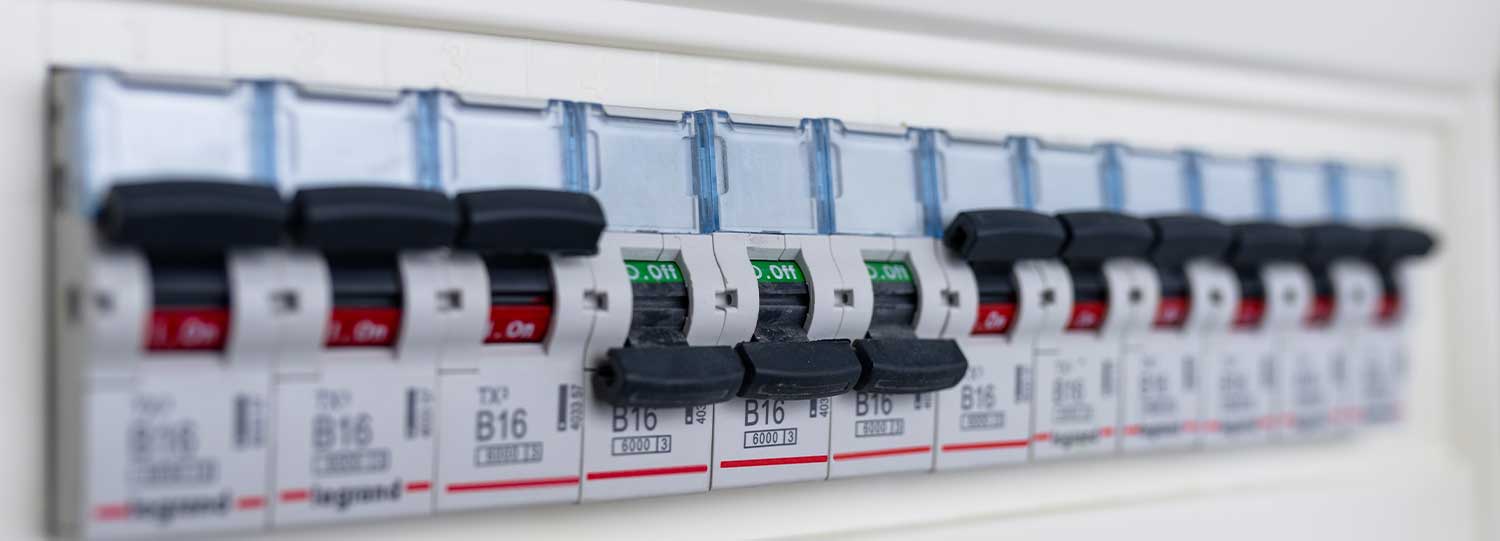
Fuse Box Installs and Consumer Unit Upgrades
In the UK many homes are still equipped with an old style fuse box. We always recommend a fuse box upgrade to a new style consumer unit. A consumer unit upgrade will provide better electrical safety in your property but more importantly, it will provide a high level of safety your family or tenants. A new consumer unit will also ensure your home is up to the current standards of the electrical regulations BS7671.
On the 15th April 2026, IEE Wiring Regulations (BS7671) Amendment 4 was published. A major change in Amendment 4 concerns consumer units, the term for a modern day domestic fuse box. New regulation 421.1.7 and regulation 443.4.1 states that for certain properties like high risk residential properties, HMOs or care homes there should be a Surge Protection Device and/or an AFDD (to detect arc faults). These devices are used to prevent electrical surges and understand if there is a fault in any of the properties circuits.
From only £499inc VAT — a typical cost of replacing fuse box equipment in a standard home installation.
Do I need to upgrade?
Providing your electrical installation is safe and meets the current BS7671 requirements for an electrical installations you won’t need to upgrade. Of course it’s very difficult to gain this information just by”looking” at your installation without testing it, so the best way to check is to have an electrical inspection carried out on your property. If you’re unsure, we can advise whether a fuse box upgrade is recommended after testing.
There is however some tell tale signs that you would benefit from upgrading your fuse box, these being:
- You have an old fusebox with a wooden back, cast iron switches, or a rewireable fuse these should be replaced, for your own safety. They usually dont have any of the modern electrical safety equipment.
- You have decided to rent out your property and are aware your electrics have not been upgraded for several years;
- You don’t have any provision of residual current devices (RCDs), SPDs or AFDDS for wiring buried in the walls, sockets circuits and outlets that may be used to plug in electrical equipment.
- You are planning a building or improvement project such as a new electric shower, Solar PV, an extension or an attic conversion and additional wiring and new circuits will need to be installed.
- Thinking about getting an electric car? Your fuse box might prevent you from installing one.
If any of the above apply, a consumer unit upgrade can modernise protection and compliance.
Unsafe Electrics could put your tenant’s life in danger and put you at risk of a significant fine, civil damages or even imprisonment. Landlords must comply with statutory regulations or face significant risks
The Landlord & Tenant Act 1985, and several other statutory regulations, requires that electrical equipment is safe at the start of every tenancy and maintained in a safe condition throughout the tenancy.
Failure to comply with the Electrical Equipment (Safety) Regulations 1994 and the Consumer Protection Act 1987 is a criminal offense and may result in:
- a fine of £5,000 per item not complying
- six months imprisonment
- possible manslaughter charges in the event of deaths
- tenants may sue you for civil damages
- your property insurance could be invalidated
- about 70 people die and 1.2 million are injured in electrical accidents in UK homes each year
- approximately 50% of fires in UK homes are caused by electrical faults (that’s about 21,000 per year)
- almost all electrocutions in the home and 20% of fires with an electrical origin could have been prevented by having RCD protection.
Why do I need RCDs?
Residual Current Device (RCD) is a must have safety device which switches electricity off in a fraction of a second if you get an electric shock. Old fuse boxes don’t have RCDs and can take significantly longer to switch off electricity – the difference between life and death. A modern fuse box upgrade typically includes RCD or RCBO protection.
Will I need any other work doing if my electrics are old?
It’s unlikely you will need any other work doing just because your electrics are old. The most common additional work that may be required is earth bonding. It is mandatory under UK wiring rules that earth bonding is present before any electrical work can be undertaken.
- Upgrading to a new 18th edition RCD protected fuse board (a modern fuse box upgrade) will make your home safer protecting you from the risk of electric shock & electrical fire.
- An RCD is a life saving device that is designed to stop you receiving an electric shock. 50% of the homes in the UK don’t have an RCD installed putting the occupants at unnecessary risk from electrical accidents.
- A professionally installed & certified 18th edition consumer unit WILL improve your electrical safety.
Looking to Upgrade Your Fuse Box?
Give us a call on 02034881899 or send us an email: info@efficienthomeenergy.uk to discuss your options.
Our prices vary on the size of the consumer unit and if you need more than one. Our prices range from £499 including VAT depending on the size of the fuseboard. For transparency on the cost of replacing fuse box assemblies we provide clear and itemised quotes before the work begins.
- All materials including a top brand METAL fuse box with breakers, such as Wylex;
- Labour carried out by us, we are NICEIC domestic installers;
- Installation Certificate on completion, which will be registered with your local council or building regulations;
- 12 months warranty on all parts and workmanship.
Q&A
How do I know if I need to upgrade my fuse box (consumer unit)?
Short answer: If your electrical installation is safe and meets current BS7671 requirements, you don’t need an upgrade. Because you can’t confirm compliance by sight alone, the best way to check is to book an electrical inspection. Clear signs you’d benefit from upgrading include: an old fusebox with a wooden back or cast-iron switches (or a mix of both), no RCD protection for buried cables/sockets/outdoor use, plans for new circuits (e.g., electric shower, Solar PV, extensions/loft conversions), or you’re preparing to rent out a property with older electrics. Do not attempt a DIY upgrade; use a qualified, reputable electrician to avoid serious safety risks.
What changed with BS7671 Amendment 4 (April 2026) and why does it matter?
Short answer: Amendment 4 introduced a key safety change for domestic installations: under new regulations, consumer units and similar switchgear in homes must be constructed from non-combustible material. In practice, that means modern, metal consumer units. This improves fire resistance and underscores the value of planning an upgrade to keep your installation aligned with current standards. Also surge protection devices should be installed and AFDD protection should be considered.
Why do I need RCDs, and will a new consumer unit include them?
Short answer: Residual Current Devices (RCDs) cut the power in a fraction of a second if you receive an electric shock, old fuse boxes typically lack RCDs and can take much longer to disconnect, which can be the difference between life and death. A modern consumer unit upgrade normally includes RCD or RCBO protection. Given that around half of UK homes still lack RCDs, and that almost all home electrocutions and about 20% of electrically caused fires could have been prevented with RCD protection, upgrading significantly improves safety.
What are my legal obligations and risks around electrical safety as a landlord?
Short answer: The Landlord & Tenant Act 1985 and related regulations require electrical equipment to be safe at the start of a tenancy and maintained safely throughout. Failing to comply with the Electrical Equipment (Safety) Regulations 1994 and the Consumer Protection Act 1987 is a criminal offense and can lead to fines up to £5,000 per non-compliant item, six months’ imprisonment, possible manslaughter charges in the event of deaths, civil claims from tenants, and invalidated insurance. With about 70 deaths, 1.2 million injuries, and roughly 50% of UK house fires attributed to electrical faults annually, ensuring RCD protection and an up to standard consumer unit is both a legal and moral imperative.
How much does a consumer unit upgrade cost, and what’s included?
Short answer: A typical fuse box replacement in a standard home starts from about £499 including VAT; final pricing depends on the size/number of consumer units. You’ll receive a clear, itemised quote before work begins. The package includes: all materials (a top-brand metal consumer unit with breakers, e.g., Wylex), labour by qualified NICEIC domestic installers, an Installation Certificate registered with your local council/building regulations, and a 12 month warranty on parts and workmanship. You’ll also get access to a free property management portal to track inspections and download certificates. Most payment methods are accepted (credit card, Visa, Solo, bank transfer, banker’s draft, cheque). Note: if required by regulations, main protective earth bonding must be in place before any electrical work; your installer will advise if this additional work is needed.
Can i upgrade the fuse box myself?
Unless fully qualified, please don’t attempt to upgrade your fuse box yourself, trust me, it’s just not worth the proposed risks or your family’s safety. The main incoming supply can be over 100amps which can be fatal if touched. Always make sure a reputable and reliable company carries this out for you.